Showing posts with label agriculture. Show all posts

Monday, March 18, 2013

Do you live in a food desert?

​Just what is a food desert?

According to the United States Department of Agriculture (USDA), it is an area with limited access to supermarkets, grocery stores, small retailers, or other outlets where fresh, healthy, and affordable food can be purchased. They are a major public health concern, as overabundance of processed food and lack of fresh fruit, vegetables, and meats make it much harder for these communities to choose a healthy diet.

The USDA is out with a new interactive map of food deserts across the country, and Washington has its fair share. Each green spot on the map represents a food desert. A scalable map for denser communities can be found here.

House Democrats are already doing their part to help eliminate these food deserts and ensure Washingtonians have the option to lead healthy lifestyles.
 
House Bill 1276, sponsored by Rep. Chris Reykdal, would create a state pilot program for farm engagement projects in our K-12 system. The bill – which passed the House on a bipartisan 89-8 vote – was inspired by Olympia’s GRuB Program, which for years has been re-engaging underperforming students by allowing them to earn credit by learning and participating in local food system development.

Not only will these pilot projects help communities across the state create more local, fresh and sustainable food choices, they will also help reduce high-school dropout rates among at-risk youth. That’s what we call a win-win.

Read this story in Spanish.

Friday, March 1, 2013

Rep. Habib named to board of Innovate Washington

Rep. Cyrus Habib
Rep. Cyrus Habib will draw upon his background in working with high-tech entrepreneurs in his new position on the board of directors of Innovate Washington, a public-private partnership that seeks to spur cutting-edge economic development in the state.
Habib, who was appointed to the board Feb. 28 by House Speaker Frank Chopp, said:
This is a great opportunity for me to continue my work making Washington the No. 1 state for job creation and business innovation. My work in the Legislature will be substantially enhanced through the connection with business leaders and others at Innovate Washington.
Innovate Washington was created by the Legislature in 2011 to catalyze job creation and 21st-century economic development by bringing together business and government leaders to focus expertise and investment on emerging technology businesses. It applies public and private financing to foster growth in the sectors of aerospace, advanced materials and manufacturing, clean energy, information technology, agriculture and life sciences.
Habib, a first-term legislator from Kirkland, is a lawyer at Perkins Coie in Seattle who specializes in providing legal services to high-tech startups. He is the sponsor of House Bill 1693, which seeks to attract entrepeneurs to Washington state by offering a business-tax break to new companies in targeted sectors of the economy.

Read this story in Spanish.
Thursday, February 7, 2013

Caring for animals, we’re into that too

Five bills aimed at protecting and helping animals have been introduced in the House so far this session. Will every dog (and for that matter cat, horse, parakeet, etc…) have his day? Let's see where those bills are:
Making poisonous substances taste nasty
Antifreeze, or rather, Ethylene Glycol, one of its main components, is sweet and tasty to animals and humans but it can also be lethal. According to the Humane Society, anywhere from 10,000 to 90,000 cats and dogs are accidentally poisoned with antifreeze every year across the nation. To protect Washington's residents, both the two and the four-legged kinds, a few years ago the Legislature passed a measure requiring that antifreeze sold, produced or distributed in the state have an aversive agent to make it taste bad. But that law didn't cover wholesale containers of 55 gallons or more. This year Rep. Sherry Appleton is sponsoring HB 1010 to include those large containers. The bill was approved by the Business and Financial Services Committee a couple of weeks ago and is now in the Rules Committee for further consideration.
See something? Say something!
HB 1186 gives immunity to veterinarians who report suspected incidents of animal cruelty from legal liability in any action brought against them. The bill's sponsor, Rep. Kathy Haigh, a vet herself, knows that sometimes veterinarians can tell, better than the average person, if an animal has been mistreated. The risk of liability keeps some veterinarians from reporting incidents they encounter in their practice. The protections under this bill should encourage veterinarians to report suspected cruelty to proper authorities. Haigh's measure was passed out of the Judiciary Committee earlier this week.
When buying a pet, let's make sure it's not a murky transaction
Say you see a guy selling lovely puppies out of his truck in a parking lot. You fall in love with one of them and want to buy it. But how much do you know about this seller? Is he licensed? Does he have a permit to sell animals in that location? What if you're dealing with a disreputable seller who does not provide safe and humane conditions for the puppies, and it turns out your puppy is sick? To prevent the sale of diseased animals to unsuspecting buyers, Rep. Mary Helen Roberts is sponsoring HB 1201, which already had a public hearing in the Judiciary Committee. Under this measure, legitimate and responsible sales of animals and adoption programs for animals are not affected.
Zero tolerance for animal cruelty
People who live or work with animals should treat them well; humans are supposed to care for their animals. Sadly, not everyone seems to be on board with that common-sense notion. Rep. Mary Helen Roberts sponsored another bill, HB 1202, which modifies animal cruelty provisions relating to the crimes of animal cruelty in the first and second degree, animal fighting, and leaving and/or confining an animal in a motor vehicle or certain enclosed spaces. This measure also had a public hearing in Judiciary a few weeks ago.
Spay/Neuter – it's the responsible thing to do!
Thousands of cats and dogs are put down every year in shelters because they can't find a home, or they are old and sickly and nobody wants to take care of them. The most effective and humane way to reduce the number of animals dying in shelters is a targeted, statewide spay/neuter effort. It is also the fiscally responsible solution. Rep. Kathy Haigh sponsored a legislation (HB 1229) that would provide financial assistance to support the costs of pet spay/neuter surgery. It would significantly reduce costs for animal care and control of homeless animals, and fewer animals would be euthanized in Washington shelters. This measure was heard before the Agriculture and Natural Resources Committee yesterday. You can find footage of the hearing in TVW.

Read this story in Spanish.

Tuesday, January 22, 2013

Globalization: Washington cows, Italian food, Korean customers

Moo:  Washington's dairy exports are increasing
Although it ranks 10th in the United States in milk production, Washington exports more dairy products than any other state except California. A big part of the reason? The appetite in Korea for pizza, with oodles of cheese topping.

That’s the story reported by the Tri-City Herald, which notes that state dairy exports increased by 35 percent in the last few years to attain an annual total of $461 million in 2011. Much of the demand comes from Japan, China, Korea and Southeast Asia, which suggests a growing taste for milk and cheese in cultures in which those foods are not traditionally a major part of the diet. With its Pacific ports, Washington is well positioned to satisfy the growing market.

The heart of Washington dairy country is the Yakima Valley, one of the largest-producing areas in the nation.

Read this story in Spanish here.

Tuesday, January 8, 2013

What you need to know about GMO

​On January 2nd, proponents of a new initiative to label Genetically Modified Organisms (GMOs) in food products sold in Washington submitted 340,000 signatures to the Secretary of State’s office – virtually ensuring a spot on the ballot for the 2013 election.
The legislative initiative, titled I-522, would require food companies to label products that contain GMOs. It would also allow citizens to file suit against companies if state officials do not take action after 60 days of being notified of a violation. A similar initiative in California was defeated last year, 51.4 to 48.6 percent.
Supporters argue that consumers have a right to know if GMOs are being used food products. They point to the fact that the health effects of GMOs are not completely known, and that some DNA sequences can come from animals, bacteria, or other non-plant organisms. Some proponents are also concerned that without proper documentation GMO crops may accidently cross-pollenate with their non-GMO counterparts nearby.
Opponents, meanwhile, point to possibility of increased food prices under the new system. The cost of labeling every product that uses GMOs, coupled with the threat of potential lawsuits if companies make a mistake, could drive up prices on a variety of everyday items.
An initiative must have 241,153 valid signatures to qualify for the ballot, which I-522 has cleared handily. The initiative will first go to the legislature, where legislators may choose to pass it as if it were a normal piece of legislation. If the legislature opts not to take action, then the initiative is sent to the voters as I-522. If the legislature amends the initiative, then both the original and the amended version are sent to voters as initiatives.
Rep. Joe Fitzgibbon can be seen discussing GMO labeling on Fox Business here.

Thursday, December 13, 2012

Applepalooza 2012 exceeds everyone’s expectations

How ya like them apples?
We knew this year's apple crop would be big and we're no strangers to big. A couple of years ago our apple crop was massive: We hit a record 109.3 million 40-pound boxes, which had a $7 billion economic impact on the state. So yeah, when growers realized in August that this year's harvest might come close to the 2010 record despite hail damage in July, they said bring it on!
Except, after last year's farm labor shortage, which forced many to leave fruit on the trees, growers were afraid there might once again not be enough workers to pick the expected 4.3 billion (108 million 40-lb boxes) apples.
But wait, there's more.
In early November, the apple crop estimate for 2012 went up to 121.5 million boxes, clearly beating the previous record. That was huge news and a new milestone for the industry.
But wait, there's more.
This week, even Todd Fryhover, president of the Washington Apple Commission in Wenatchee, was taken aback when he learned the latest estimate for this year's apple crop is 129.7 million boxes!
That's an increase of 20.4 million boxes and 18.6 percent from the industry's prior record.
If anything should get credit for this jump in the last month, that would be the weather. According to Dan Kelly, assistant manager of Washington Growers Clearing House Association, thanks to good weather there were more picking days, which meant more fruit could be harvested even with a shortage of pickers. He explained that fruit passed over early was picked later allowing it to grow larger in size, which also contributed to a more bountiful crop.

Read this story in Spanish here.

Tuesday, November 20, 2012

How do you like them blueberries?

We all know Washington is home to great apples and lots of them. Last year's crop was 109 million boxes and this year that number could grow to 121 million.
But did you know we're also breaking blueberry production records?
The Capital Press reports that we're looking at a 70 million-pound crop, up from 61 million last year. According to the Washington Blueberry Commission, Washington state has more than tripled its blueberry acres in the last five years, with much of the recent growth happening east of the Cascades.
Our neighbors in Oregon produced 65 million pounds of blueberries in 2011 and this year they're expecting up to 75 million pounds.
The U.S. Highbush Blueberry Council is forecasting almost 286 million pounds along the entire west coast for 2012. 50 blueberries weigh about one ounce; 286 million pounds is 4,576,000,000 ounces, which is 228,800,000,000 blueberries. Yeah, that's definitely a lot of berries! 56 percent of those will go to fresh market and the remainder will be processed.
Blueberries are becoming more and more popular around the world not only because they're really tasty, but also because they're really healthy. They are high in fiber, very low in fat and sodium and, compared to nearly 40 other fruits and vegetables, blueberries rank highest in disease-fighting antioxidants. 3.5 oz.—or around 175—fresh blueberries could deliver the equivalent antioxidant capacity of five servings of other fruits and vegetables.
How does a smoothie sound right about now?

To read this story in Spanish, click here.

Tuesday, May 22, 2012

Cottage Foods Act: Coming to a farmer’s market near you

Just last year Governor Gregoire signed the Cottage Food Act of Washington into law, which directs the Department of Agriculture to license cottage food facilities and allows the permit holder to prepare and sell certain foods in their home kitchens. State law previously required folks to operate a commercial kitchen, complete with stainless steel countertops and three sinks, in order to sell their baked goods. A full-scale commercial kitchen was out reach for most families, and this meant that a lot of cherry cobblers and blueberry muffins were being sold under-the-table without permitting or regular inspection by the local health jurisdiction. A sort of underground baked goods black market, if you will.
The Department of Agriculture is currently in the rule-making process, and the law could go into effect as early as this summer. Friday’s Seattle Times reports on some of the entrepreneurial excitement surrounding our state’s new law. From the story:
For more than a year, Jennifer Greiner Clark sold cakes under the table. Specifically, she baked them in her Ballard kitchen and not in a commercial kitchen, as the law required. When it looked like her sales would expand beyond friends (who reimbursed her for ingredients rather than paying $150 for fancy 8-inch layer cakes), Clark looked into renting commercial kitchen space. She found it prohibitively expensive, particularly because she also would need to pay for child care. At home, she bakes and decorates after her children are in bed.
Then came the Cottage Food Act of Washington, an economic blessing from the Legislature on small, home-based entrepreneurs looking to sell cakes, cookies, jams, jellies and other so-called "low-risk" foods.
"I was kind of feeling hopeless about it, and now I'm very excited," said Clark, who hopes to launch an aboveboard decorated-cake business when her 2-month-old daughter is a little older.

The law also ensures that the rule applies only to small operations, by limiting the annual revenue from a home kitchen to $15,000.  Families across the state will have a cost-effective way to supplement their income, and consumers will know that the delicious baked goods from their local farmer’s market are safe and healthy. A true win-win for Washingtonians!

To read this story in Spanish, please click here.

Friday, May 18, 2012

A comeback for cider?

Photo credit: WSU NWREC
With the state’s wine industry booming and microbreweries thick on the ground in the Pacific Northwest, opportunity-seeking farmers in Washington are excited about the potential of a different fermented alcoholic beverage: hard apple cider.

The non-profit Northwest Agriculture Business Center and the Washington State University Northwest Washington Research and Extension Center – both in Mount Vernon – are jointly sponsoring one-day workshops in June and July for entrepreneurs interested in growing apples for cider and in producing cider. More intensive week-long courses in those months are sold out.

Hard cider is the fastest growing component of the alcoholic beverage industry. Washington clearly is fertile land for apple orchards – the state is by far the No. 1 producer in the nation – but the Red Delicious, Gala, Honeycrisp and other eat-fresh varieties that make up so much of the crop aren’t really well-suited to making cider. Traditional cider varieties include Dabinett, Chisel Jersey, Kingston Black and Brown Snout.

The WSU extension service in Mount Vernon is conducting research into the best varieties for cider production in Washington, and you can read more about that by clicking here.

Cider is cherished and made with care in traditional producing areas in England, France and other countries. For 18th-century American colonists in New England, it was the drink of choice. Changing patterns of immigration and settlement, as well as technological advances, led to the rise of beer to dominance in the U.S. in the 19th century.

To read this story in Spanish, please click here.

Thursday, October 27, 2011

Washington’s Ag industry going strong


Washington’s agricultural production in 2010 was $7.93 billion and it looks like this healthy trend will continue in 2011.
Washington farmers produce about 300 crops annually and we rank first in the nation for production of ten crops including apples, in fact, about half of all U.S. apples are grown in our state. The apple industry alone was valued at $1.4 billion last year.
But other important Washington products also increased in value:
  • Milk had a production value of $950 million (39% increase from 2009)
  • Wheat, $925 million (56 % increase)
  • Cherries, $367 million (59 % increase)
That’s not all the good news for Washington farmers, who will be seeing new trade opportunities and lower tariffs on U.S. goods now that President Obama signed free trade agreements with South Korea, Colombia and Panama.

And on the subject of lower fees, last Friday Mexico canceled the last of the tariffs it had imposed on American goods in 2009. You can read an HDC Advanced post from July to learn how that tariff war with Mexico finally reached its end.

You can also check out this AP story to learn more about how well our Ag industry did in 2010 and what we can expect this year.


Wednesday, October 12, 2011

And the Legislator of the Year Award from the Farm Bureau goes to…


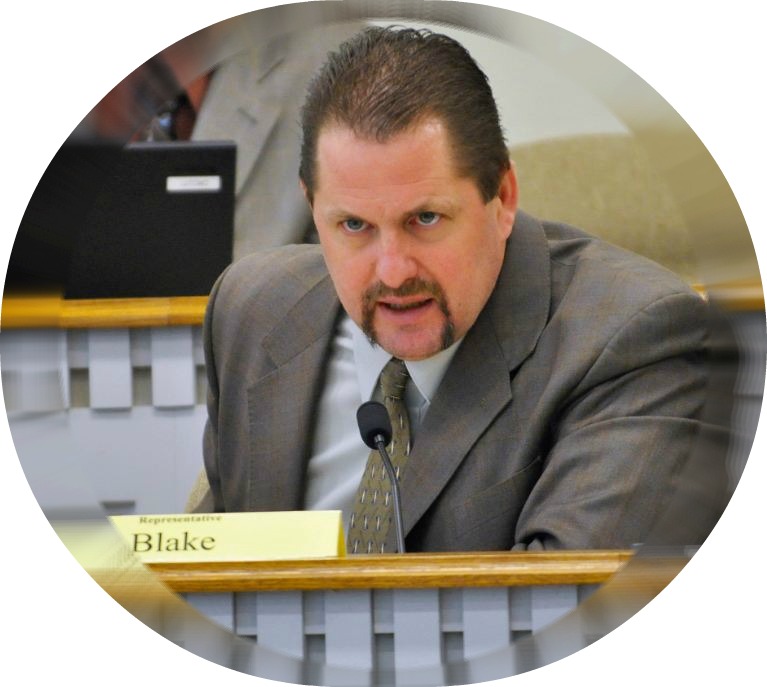
Our very own Rep. Brian Blake!
The Washington Farm Bureau has been awarding this honor to one or more legislators every year since 1995. Their criteria are based on the lawmaker’s voting record and outstanding actions to help strengthen family farms.
 
This session Blake, chair of the House Agriculture and Natural Resources Committee, was chosen by the Bureau for championing funding of the Department of Agriculture and the Conservation Commissions-services critical to the continued success of Washington’s agricultural businesses.
 
We congratulate Rep. Brian Blake for this important recognition!
Read the press release here.

Wednesday, September 28, 2011

Legislative Committee heads to Okanogan

The House Agriculture and Natural Resources Committee will hold a work session tomorrow, Sept. 29, from 6 p.m. to 8 p.m. at the Okanogan County Courthouse.

“These are difficult economic times and our focus should be not only on creating new jobs, but also on protecting the ones we already have, especially in our core industries like tree fruit growing, mining and logging,” said Rep. Brian Blake, committee chairman and a former logger. “I’m looking forward to getting in-depth information on the current situation, as well as the present and future needs of these basic industries to ensure they continue being strong pillars in our economy.”

Citizens are welcome to attend the work session, but no public testimony will be taken during the meeting. However, written testimony to the committee will be accepted before and after the meeting.

Who: Committee members; invited guest presenters, including regional county commissioners; and the public.

What: House Agriculture and Natural Resources Committee work session

When:
Thursday, Sept. 29

Time: 6 p.m. to 8 p.m.

Where:
Okanogan County Courthouse, 123 Fifth Avenue North, Room 150, Okanogan


To read this blog post in Spanish, please go here.

Friday, July 8, 2011

Lift your apple cider glass and celebrate the end of a costly NAFTA dispute

The end of a small tariff war with Mexico could mean mucho dinero for Washington's agricultural industry.

One of the provisions of the 1994 North America Free Trade Agreement allowed commercial trucks open access across the US borders with both Mexico and Canada.

But access on this side of the border was not fully granted due to safety and environmental concerns. And in 2009, Congress cut funding for a pilot program to allow long-haul Mexican trucks to circulate in the U.S.

In retaliation, Mexico placed tariffs on 99 American products including tree fruit - our very own cherries, pears, apricots and, of course, apples. These tariffs have cost our fruit growers tens of millions of dollars.

But there’s good news in the very, very near future, as an agreement signed Wednesday will allow U.S. and Mexican trucks to freely transport goods across the shared border.

Consequently, Mexico will soon remove the tariffs. Twenty percent will be reduced almost immediately and the rest will come off in the fall. Great timing, too, because Mexico is Washington’s largest apple export market.

According to the Yakima Herald story:
Mexico is the state's largest apple export market, accounting for more than 10 million boxes annually. The 20 percent tariff imposed on apples in 2010 has cost growers an estimated $44 million annually.

Losses to the pear, cherry and apricot industries are estimated at $30 million since those products were first subjected to the tariff in 2009, according to estimates provided by the Northwest Horticultural Council. The council represents Northwest growers on trade and regulatory issues.
Read the full story in the Yakima-Herald Reporter.

To read this blog post in Spanish, go here.

Apture