
Showing posts with label Larry Seaquist. Show all posts
Showing posts with label Larry Seaquist. Show all posts
Monday, March 18, 2013
Wednesday, March 13, 2013
Higher Ed Live Chat with Larry Seaquist

SAVE THE DATE – March 18, noon – 1 p.m.
Rep. Larry Seaquist, chair of the House Higher Education Committee, would like to invite students, parents, faculty, administrators, and anyone else with an interest in higher education issues to a live chat on Monday, March 18 from noon to 1 p.m.
Seaquist will give an overview of where we are in the legislative process with higher ed and answer questions from chat participants.
Seaquist particularly wants to hear from students willing to share their stories about struggling with student debt, course availability, and other challenges they face while pursuing a degree or certificate.
Come back to the HDC Advance on Monday, March 18 at noon to be a part of the discussion.
You can also submit your email address below and we’ll send you a reminder when the event is about to start.
To help you remember about the live chat, you can submit your email address below. We’ll send you a reminder as the event approaches.
Read this story in Spanish.


Thursday, January 31, 2013
Lawmakers tackle student debt

On
Tuesday, January 29th the House Higher Education committee, chaired
by Representative
Larry Seaquist (D-Gig Harbor), held a discussion and work session on higher
education financial aid and student debt in the state of Washington.
In 2010, student debt made headlines for
surpassing the debt on credit cards in the United States. More recently, it was
revealed that the proportion of student loan balances that are in delinquency
(unpaid for 90 days or more) surpassed that of credit-card balances for the
first time.
As Rachel Sharp, Director of Student
Financial Assistance with the Washington
Student Achievement Council, made clear when she was presenting to the
committee, Washington does a much better job at controlling student debt than
the national average. State financial aid programs – such as the State Need
Grant, State Work Study, and College Bound Scholarship – have done a good job of
helping mitigate recent tuition increases.
 |
| Rep. Larry Seaquist |
Members of the Higher Education Committee
agreed that the growth in student debt is cause for concern, however, and that
more needs to be done to improve higher education affordability and educate
students about taking on debt. Their work session on Tuesday provided important
information and a framework for moving forward as the legislative session
progresses.
Here are some of the key facts that were
presented to the committee:
- Annual borrowing is increasing at public four year institutions, private four year institutions, and community and technical colleges
- Private loans have actually decreased in recent years, despite overall borrowing going up
- 56 percent of students graduate from four year institutions with debt
- Despite this, Washington still ranks 39th in debt load after graduation, meaning our students have less debt than 38 other states
- 1.7 billion in financial aid is provided annual to resident undergraduate students attending four year, community, and technical colleges
Thursday, June 7, 2012
Bye-bye HEC, hello SAC
 |
| Photo credit: University of Washington |
The council was created in the 2012 legislative session by House Bill 2483, sponsored by House Higher Education Committee Chair Larry Seaquist of Gig Harbor. That bill followed up on Senate Bill 5182, passed in 2011, which abolished the HECB. The “HEC Board” has
been around since 1985.
Critics of the board said it was too passive and its mission too vague. The new council is expected to focus more intently on increasing student success, including the earning of more college degrees or postsecondary certificates. To do that, it will recommend goals to the Legislature and governor, identify potential resources to tap and encourage promising innovations.
The council will be made up of nine members appointed by the governor, including one nominated by the presidents of the four-year public universities, one from the community and technical college system, one from the state K-12 superintendent’s office, one from the state’s private colleges, a student and four from the general citizenry.
The 2012 bill also sets up a joint legislative committee on higher education to review the council’s work and suggest legislation.
To read this story in Spanish, please click here.
To read this story in Spanish, please click here.
Tuesday, May 1, 2012
Seaquist hosting final telephone town hall Wednesday

While telephone town halls are not designed to replace in-person meetings, they provide a cost-efficient forum for legislators to connect with and hear from their neighbors. Participants will get an update on how the 2012 legislative session ended and what’s in store for higher education down the road. Participants will also have opportunities to ask questions to Rep. Seaquist during the hour-long call.
Registered voters within these districts will be called when the telephone town halls begin. Those that do not receive a call and would like to participate can call 1-877-229-8493 and enter the ID code “18646.”
To read this post in Spanish, click here.
Monday, March 12, 2012
Reps. Pettigrew and Seaquist are calling constituents this week
 |
| Rep. Eric Pettigrew |
Tomorrow evening, beginning at 6:00 p.m., Rep. Eric Pettigrew will be calling households throughout the 37th District, which includes the Seattle neighborhoods of Rainier Valley, Madrona, North Beacon Hill, Rainier Beach, Mt. Baker, Leschi, Columbia City, southern Capitol Hill, and Skyway as well as parts of Renton.
And on Thursday evening, March 15, Rep. Larry Seaquist will hold his second telephone town hall of the year, also beginning at 6:00 p.m. He represents the 26th Legislative District, which includes parts of Pierce and Kitsap counties, including the communities of Gig Harbor, Port Orchard, Purdy, Olalla and parts of Bremerton.
 |
| Rep. Larry Seaquist |
While not a replacement for live, in-person town halls, telephone town halls provide a way for legislators to speak one-on-one with constituents and answer questions about specific issues. Telephone town halls also have a higher participation rate than in-person events. For example, nearly 5700 people participated in Rep. Seaquist's January 26 telephone town hall.
To read this post in Spanish, click here.
Saturday, February 11, 2012
Week 5 House Floor Speech Highlights
It was a historic week in the state House. After a very civil House floor debate earlier this week, Washington is on its way to becoming the seventh state in the nation to legalize equal marriage. The House also passed measures that will improve the lives of foster children, expanded suicide prevention training, and honored the National Guard. Check out these clips from this week's floor debates.
SB 6239 - Marriage Equality
Rep. Jamie Pedersen
Rep. Drew Hansen
Rep. Sam Hunt
HB 2592 - Extending Opportunities for Foster Care Children
Rep. Reuven Carlyle
HB 2366 - Suicide Prevention Education
Rep. Tina Orwall
HR 4655 - Honoring the National Guard
Rep. Larry Seaquist
To read this story in Spanish, click here.
SB 6239 - Marriage Equality
Rep. Jamie Pedersen
Rep. Drew Hansen
Rep. Sam Hunt
HB 2592 - Extending Opportunities for Foster Care Children
Rep. Reuven Carlyle
HB 2366 - Suicide Prevention Education
Rep. Tina Orwall
HR 4655 - Honoring the National Guard
Rep. Larry Seaquist
To read this story in Spanish, click here.
Friday, February 3, 2012
Rep. Larry Seaquist on the changing role of our National Guard
Each year during the legislative session, the Legislature honors our state's National Guard. Today was National Guard Day in both the House and Senate, with members paying tribute to the men and women in uniform who serve in the Guard both stateside and overseas.
As he has done in previous years, Major General Timothy J. Lowenberg addressed House Democrats during their caucus session this morning. Lowenberg has been the commander of Washington's Army and Air National Guard since 1999.
Several bills to assist military members and their families were also passed by the House last month.
This morning on the House floor, Rep. Larry Seaquist spoke about how the role of our National Guard has changed over the years, in some ways coming full circle to how it was first envisioned in the early days of our great nation:
To read this story in Spanish, click here.
As he has done in previous years, Major General Timothy J. Lowenberg addressed House Democrats during their caucus session this morning. Lowenberg has been the commander of Washington's Army and Air National Guard since 1999.
Several bills to assist military members and their families were also passed by the House last month.
This morning on the House floor, Rep. Larry Seaquist spoke about how the role of our National Guard has changed over the years, in some ways coming full circle to how it was first envisioned in the early days of our great nation:
To read this story in Spanish, click here.
Thursday, February 2, 2012
Community & Technical college students rally
 Hundreds of community and
technical college students rallied at the state capital yesterday with one
clear message for the Legislature: no more cuts to higher education. Democratic
and Republican lawmakers from the House and Senate spoke to the crowd of
students who filled the legislative building rotunda.
Hundreds of community and
technical college students rallied at the state capital yesterday with one
clear message for the Legislature: no more cuts to higher education. Democratic
and Republican lawmakers from the House and Senate spoke to the crowd of
students who filled the legislative building rotunda. |
| Rep. Larry Seaquist |
The state is facing a
$1.5 billion shortfall for the remainder of the current budget cycle. At this
point, lawmakers are considering all budget cutting options, including higher
education, in order to balance the budget.
Higher education tuition
has risen dramatically in recent years due to the slow economy. In 2008,
undergrad students at the University of Washington were paying $6,679 a year
in tuition
and fees. For the current school year, those same students are paying $10,223 a year – a 35% increase in
three years.
Like most political rallies,
the students were armed with creative signs to express their messages about
higher education.
- “Please open your minds
to other options.
Our future depends on you.
Our children depend on us.”
- “Education = Economic Recovery”
- “Do not cut the solution”
- “Education is a right”

Wednesday, January 25, 2012
Lytton, Seaquist host teletown halls this week
How do we do more with less?
For the last several years, lawmakers have been looking at innovative and less-expensive ways of communicating with their constituents. Teletown halls were recently embraced as a cost efficient way to reach out to constituents during the legislative session.
Reps. Kristine Lytton (D-Anacortes) and Larry Seaquist (D-Gig Harbor) will be hosting hour-long teletown hall conversations this week.
Rep. Lytton’s call with those living in the 40th Legislative District will happen tonight at 6 p.m. She’ll discuss what’s going on with education including her trio of bills that would help teachers and principals grow in their careers, give school districts greater spending flexibility, and increase state funding for all-day kindergarten programs.
Rep. Seaquist’s teletown hall for 26th Legislative District residents will start at 6:35 p.m. on Thursday, January 26. As the chair of the House Higher Education Committee, Rep. Seaquist is excited to have a conversation about the latest in higher education funding. He’ll also discuss other topics like the state budget situation and the economy. Callers will be encouraged to ask their own questions during the conversations.
Registered voters within these districts will be called when the teletown halls begin. Those that do not receive a call and would like to participate can call 1-877-229-8493 and enter the ID code “18646.”
To read this story in Spanish, click here.
For the last several years, lawmakers have been looking at innovative and less-expensive ways of communicating with their constituents. Teletown halls were recently embraced as a cost efficient way to reach out to constituents during the legislative session.
 |
| Rep. Kristine Lytton |
Rep. Lytton’s call with those living in the 40th Legislative District will happen tonight at 6 p.m. She’ll discuss what’s going on with education including her trio of bills that would help teachers and principals grow in their careers, give school districts greater spending flexibility, and increase state funding for all-day kindergarten programs.
 |
| Rep. Larry Seaquist |
Rep. Seaquist’s teletown hall for 26th Legislative District residents will start at 6:35 p.m. on Thursday, January 26. As the chair of the House Higher Education Committee, Rep. Seaquist is excited to have a conversation about the latest in higher education funding. He’ll also discuss other topics like the state budget situation and the economy. Callers will be encouraged to ask their own questions during the conversations.
Registered voters within these districts will be called when the teletown halls begin. Those that do not receive a call and would like to participate can call 1-877-229-8493 and enter the ID code “18646.”
To read this story in Spanish, click here.
Tuesday, December 13, 2011
Wanted: Energetic and enthusiastic students to serve as legislative pages
 |
| House pages Myah Dawkins and Ty'zhuan Lewis serving as flag bearers |
While spending a week in Olympia, pages receive a
hands-on and interactive civics lesson at the state legislature. Pages perform
a wide variety of tasks such as presenting the colors, running messages, and during debates on the House
and Senate floors. Students also spend a few hours a day learning about state
government in the page school.
“I really encourage students and their parents to consider this,” said
Rep. Larry Seaquist. “This is a great way for school-room study of history and
democracy to come alive. Our pages really enjoy this week in the House.”
To serve as a legislative page, a public, private, or home school student
must: - Have permission from a parent or guardian
- Have permission from school
- Be sponsored by a current member of the House of Representatives or Senate
- Be at least 14 years of age and not have reached his or her 17th birthday
Additional information about the House page program can be found here. Click here to visit the Senate Page Program website.
To read this story in Spanish, click here.
To read this story in Spanish, click here.
Tuesday, September 13, 2011
Higher education tour coming to Spokane, Ellensburg and Tri-Cities
Members of the House Higher Education Committee will be arriving in eastern Washington cities next week. Meetings at WSU-Riverpoint in Spokane and Central Washington University in Ellensburg will focus on bringing those community perspectives to the state’s higher education leaders.
 Rep. Larry Seaquist is chair of the committee going on The Educating Community Chautauqua Series.
“It’s time to talk about how we want our state to look as we recover from this recession,” Seaquist said.
Rep. Larry Seaquist is chair of the committee going on The Educating Community Chautauqua Series.
“It’s time to talk about how we want our state to look as we recover from this recession,” Seaquist said.
“Without question we need to be better educated, from more apprenticeships to more degrees, in order to compete in a changing world economy.”
The WSU-Riverpoint discussion on September 20 will have a focus on what’s called pipeline issues, like student transfer and transition problems.
At Central on September 21, access for underserved communities will be a key topic.
Members are also invited to a non-committee meeting at WSU-Tri Cities and Columbia Basin College on September 22. “By moving the conversation from the capital to the community, I think we can make significant progress to improve our state’s higher education system. For the committee members especially, this is the chance to put faces to the decisions we make in Olympia.”
The series will continue in October at Seattle University and Skagit Valley Community College, then in November there will be a culminating meeting for the series at South Puget Sound Community College.
Press and media are welcome to attend the series meetings. Contact Rep. Seaquist’s office for more information.
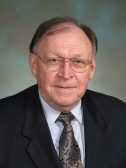 Rep. Larry Seaquist is chair of the committee going on The Educating Community Chautauqua Series.
“It’s time to talk about how we want our state to look as we recover from this recession,” Seaquist said.
Rep. Larry Seaquist is chair of the committee going on The Educating Community Chautauqua Series.
“It’s time to talk about how we want our state to look as we recover from this recession,” Seaquist said.“Without question we need to be better educated, from more apprenticeships to more degrees, in order to compete in a changing world economy.”
The WSU-Riverpoint discussion on September 20 will have a focus on what’s called pipeline issues, like student transfer and transition problems.
At Central on September 21, access for underserved communities will be a key topic.
Members are also invited to a non-committee meeting at WSU-Tri Cities and Columbia Basin College on September 22. “By moving the conversation from the capital to the community, I think we can make significant progress to improve our state’s higher education system. For the committee members especially, this is the chance to put faces to the decisions we make in Olympia.”
The series will continue in October at Seattle University and Skagit Valley Community College, then in November there will be a culminating meeting for the series at South Puget Sound Community College.
Press and media are welcome to attend the series meetings. Contact Rep. Seaquist’s office for more information.
Monday, June 6, 2011
A smart move for Washington students

Landing the jobs of tomorrow won’t be an easy task, and the need for education and training beyond high school is increasingly critical.
How can we create and keep the high-tech, cutting-edge jobs of the future?
Let’s start by making sure our own kids get the education and skills needed to claim those jobs. Moving in that direction, Governor Gregoire signed a package of higher education bills into law today, paving the way for comprehensive and creative change for higher education in Washington state.
Rep. Reuven Carlyle is the prime sponsor of House Bill 1795, which was signed today and will allow public four-year institutions to set tuition rates to meet local demand, while also increasing financial aid for low and middle-income students.
“Our challenge as a state is to find a thoughtful balance between ongoing state budget deficits and a significant need for access, affordability and quality in our state colleges and universities,” Carlyle said. “This legislation embraces the differences within our public college system and boosts financial aid that will bring relief for real students needing real relief.”
Gregoire also signed Rep. Tim Probst’s House Bill 2088 to help students earn degrees in high-employer demand fields. With the creation of the Opportunity Expansion Program, the state will increase the number of students obtaining high-demand, high-wage jobs at state four-year colleges and the Opportunity Scholarship Program will provide scholarships to low and middle-income students who earn degrees in high-demand careers and other educational programs. At today’s bill signing ceremony, the Boeing and Microsoft companies announced they will each be putting $25 million into the Opportunity Scholarship Program.
“Washington is the first state in the nation to create a scholarship program like this,” Probst said. “We hope that other companies will follow Microsoft and Boeing’s incredible example, so we can offer 10,000 scholarships or more before Christmas of this year.”
Also signed today, held at Seattle’s Cleveland High School, were Senate Bill 5749, making minor changes to the actuarially-sound Guaranteed Education Tuition program, and Senate Bill 5182, eliminating the Higher Education Coordinating Board and transferring their functions.
“In order to compete in tomorrow’s economy, Washington simply must become better educated and better skilled,” said Rep. Larry Seaquist, chair of the House Higher Education Committee. “With the bipartisan leadership and significant community involvement in this great set of higher education legislation, we’ve set the foundation for success in our colleges and universities.”
To read the full press release, please click here. Here’s a link to the Governor’s release from today as well.
Monday, April 18, 2011
Lots of jobs for folks in the right fields
 There’s good news and bad news in a recent report by the Higher Education Coordinating Board (HECB). The good news is that, despite the recession, the number of job openings for people who receive degrees in high-demand fields is increasing; the bad news is that, currently in our state, there are way more job openings than qualified workers to fill them.
The Regional Needs Analysis Report notes that the strongest statewide demand is for degree holders in the areas of:
• Science, technology, engineering, and mathematics (STEM);
• Health sciences such as nursing, allied health, medicine, biosciences;
• Specific teaching fields (science and mathematics);
• Business management and accounting.
By the year 2018, 67 percent of all jobs in our state will require some postsecondary education. About 20 percent of those jobs will require some college but no degree, and about 47 percent will require an associate degree or higher.
But right now Washington is not producing enough high-demand degree holders – especially in the STEM fields – to meet its current and future needs. Back in February, Rep. Larry Seaquist, Chair of the Higher Education Committee, talked about the issue here.
To keep employers from continuing to import talent to fill those positions, the Legislature has passed numerous measures in the past few years to increase advanced degree production in Washington state. Here’s a small sample of bills passed for this purpose:
• Enhanced STEM instruction (2010: HB 2621)
• University engineering programs (2009: SB 5276)
• Applied baccalaureate degree pilot program (2008: SB 5104)
• HECB Strategic Master Plan (2008: HCR 4408)
• Get Ready for Math & Science Scholarship Program (2007: HB 1779)
These laws are helping us build the skilled workforce needed to satisfy Washington employers. But we’re not there yet, and the current economy is making getting there an increasingly difficult struggle as we grapple with adequately funding our colleges.
Thursday, April 14, 2011
Legends of the Capitol: Navy and Beef
Yesterday the House honored the United States Navy for their service to the country and their role as neighbors in many Washington communities. House Resolution 4648 "Observing Navy Day to recognize the contributions of all Navy personnel and their family members," had a few sponsors and was adopted. 

 Rep. Larry Seaquist, a man with a little experience with the Navy, supported the resolution with a speech on the floor:
  Many in the capitol then turned their focus to Beef Day, something many lawmakers and staff look forward to all session. It's put on by the Washington Cattlemen's Association to increase awareness of beef and its importance to the state.


 Rep. Larry Seaquist, a man with a little experience with the Navy, supported the resolution with a speech on the floor:
  Many in the capitol then turned their focus to Beef Day, something many lawmakers and staff look forward to all session. It's put on by the Washington Cattlemen's Association to increase awareness of beef and its importance to the state.

Thursday, March 10, 2011
Post-recession economy? Look no further than our college campuses
Round two begins at 10 a.m. in the Higher Education Committee on how potential budget cuts will affect universities and colleges. Yesterday's session focused on the state's four-year institutions. You can read the troubling reports here and here.
Committee Chair Larry Seaquist:
Today's hearing focuses on the Community and Technical Colleges and can be viewed on your local TVW channel, or online.
Yesterday's hearing is archived, also at TVW:
Committee Chair Larry Seaquist:
If you want to see our post-recession economy, look no further than our college campuses. Opportunities in the global workplace will require specialized skills and greater levels of education, and our colleges and universities are the ones preparing our state.
Today's hearing focuses on the Community and Technical Colleges and can be viewed on your local TVW channel, or online.
Yesterday's hearing is archived, also at TVW:
Friday, March 4, 2011
WA Whiteboard: Unemployment and Education
Rep. Larry Seaquist takes a moment to connect unemployment rates to work he's doing in the Higher Education Committee:
Wednesday, February 16, 2011
Tax exemption hard to close? There's a BRAC for that
Rep. Larry Seaquist, a former battleship captain and Pentagon strategist, doesn’t bring many military strategies out in the Legislature, but he thinks one might work to better fund education. He's introduced House Bill 1980 to develop a Washington state version of the successful federal Base Closure and Realignment Commission, otherwise known as BRAC.
 The tax priorities realignment commission, using public hearings, would identify tax exemptions which could be closed in favor of funding specific education-improvement objectives. Seaquist on the proposal:
You can read more about Seaquist's proposal in the bill or the press release.
 The tax priorities realignment commission, using public hearings, would identify tax exemptions which could be closed in favor of funding specific education-improvement objectives. Seaquist on the proposal:
Tax exemptions are intended to create economic benefit for someone, education creates economic benefit for everyone. For the first time, my bill provides a way for all our citizens to participate in setting priorities about how best to climb out of this recession.
You can read more about Seaquist's proposal in the bill or the press release.
Tuesday, February 8, 2011
WA Whiteboard: Seaquist on falling higher-education attainment
Rep. Larry Seaquist, chair of the Higher Education Committee, talks about the need to drastically increase educational attainment in our state.
Tomorrow at 8:00 a.m. the committee will have a public hearing on The Higher Education Opportunity Act, one bill attempting to address the attainment problem, among others.
Tomorrow at 8:00 a.m. the committee will have a public hearing on The Higher Education Opportunity Act, one bill attempting to address the attainment problem, among others.
Monday, January 31, 2011
Carlyle's Higher Education Opportunity Act
Rep. Reuven Carlyle announced his Higher Education Opportunity Act today on his blog, which he will formally introduce Tuesday. Tomorrow at noon, Carlyle and Rep. Larry Seaquist will be available to the press to talk about Carlyle's bill, higher education funding, and other issues coming up in their Higher Education Committee.
Carlyle on his proposal:
You can read his full post, along with details about his proposal, at his blog: reuvencarlyle36.com
Details of the media availability:
Who: Rep. Reuven Carlyle, D-Seattle, and Rep. Larry Seaquist, D-Gig Harbor, the vice chair and chair of the House Higher Education Committee
When: February 1, 2011 at 12:00 p.m.
What: Media availability to discuss The Higher Education Opportunity Act, introduced by Carlyle
Where: John L. O’Brien Building, Conference Room 114 – located inside the entrance to Hearing Room E
Carlyle on his proposal:
House Higher Education Committee Chair Rep. Larry Seaquist, Senate Higher Education Committee Chair Rodney Tom and I are working together to attempt to deal openly and genuinely with the complex reality of decreasing state appropriations and rising tuitions.
It is easy for some to criticize this new reality. The challenge is to deal with it openly and explore new models and approaches that can help us find a more viable, stable and equitable structure in today’s era of scarcity.
Unfortunately, the trend in the Legislature is to reduce funding for the institutions of higher education under the operating assumption that they can continue to absorb the cuts without measurable or meaningful consequences for students, faculty, families and supporters. The trend of decreasing state support and increasing tuition seems virtually unstoppable. The question is not whether this trend will continue but how we can get a handle on the negative consequences for the middle class and more intelligently manage this structural shift.

You can read his full post, along with details about his proposal, at his blog: reuvencarlyle36.com
Details of the media availability:
Who: Rep. Reuven Carlyle, D-Seattle, and Rep. Larry Seaquist, D-Gig Harbor, the vice chair and chair of the House Higher Education Committee
When: February 1, 2011 at 12:00 p.m.
What: Media availability to discuss The Higher Education Opportunity Act, introduced by Carlyle
Where: John L. O’Brien Building, Conference Room 114 – located inside the entrance to Hearing Room E
Subscribe to:
Posts (Atom)
