
Governor Gregoire held a press conference this morning in
which she outlined her preliminary choices for cuts to the state budget in
order to address a $2 billion shortfall.
She also presented alternative budget cuts that, together with her
preliminary choices, add up to a total of $4.2 billion in budget reduction
options, which she described as “dreadful.”
You can find links to complete information about the
budget reduction alternatives here.
Some of the governor’s preliminary choices will be
included in her 2012 Supplemental Budget proposal, which will likely be
released just before Thanksgiving.
The cuts are being proposed as a result of the September revenue forecast, which showed that state revenue
collections were down $1.8 billion from what had been anticipated when
lawmakers passed a two-year state operating budget last spring. At today's press conference, the governor
noted that the state has already cut the budget by $10.5 billion in the past,
and that only about one-third (or $8.7 billion) of the current budget is
eligible to cut.
House Majority Leader Pat Sullivan released this statement today in response to the list of proposed
budget actions.
More budget information can be found on our website.
Thursday, October 27, 2011
Statement from House Majority Leader Pat Sullivan regarding Governor Gregoire’s list of possible budget actions

“Ways and Means Chair Ross Hunter and the rest of our budget team have been going through the same process the Governor and her staff have, and I think the numbers she released today confirm that there are no quick, easy ways to meet the challenges this lingering recession is throwing our way. You can point to any cut on her list and identify people in every community of our state who are going to be hurt by it.
The public is counting on us to act deliberatively and responsibly, keeping in mind not only the short-term effects on individuals and families, but also the possible long-term effects on the future of our state and our chances for an economic recovery. What kind of a state do we want to have coming out of this crisis?
That said, it is our intention to approve a balanced budget as quickly as possible.”


Washington’s Ag industry going strong
Washington’s
agricultural production in 2010 was $7.93 billion and it looks like this
healthy trend will continue in 2011.

But other important Washington products also increased in value:
- Milk had a production value of $950 million (39% increase from 2009)
- Wheat, $925 million (56 % increase)
- Cherries, $367 million (59 % increase)
And on the subject of lower fees, last Friday Mexico canceled the last of the tariffs it had imposed on American goods in 2009. You can read an HDC Advanced post from July to learn how that tariff war with Mexico finally reached its end.
You can also check out this AP story to learn more about how well our Ag industry did in 2010 and what we can expect this year.
Wednesday, October 26, 2011
Remembering Alex Deccio

While Democrats and Sen. Deccio, a Republican leader, were often on different sides of issues, we respected his leadership, his willingness to listen to all sides of public questions and his unflagging dedication to principle. Countless lives in Washington are better off because of Sen. Deccio’s leadership on health care and prescription drugs. Indeed, many Washingtonians are alive today because of Sen. Deccio’s early, courageous and effective commitment to AIDS treatment and prevention.
If there is ever a Washington
State edition of Profiles in Courage, one of the chapters must surely be titled
“Alex Deccio.” House Democrats join our Republican colleagues in the
House and Senate in honoring the memory and mourning the loss of Alex Deccio, a
Washington leader who will be missed.
Washington blazes trail by linking child development science to better public policy

This time, it's in the area of early childhood development. Earlier this week, the governor's office issued a press release announcing Washington's selection as the first "Innovation State" in the nation by the Early Childhood Intervention Partnership (ECIP), which is affiliated with the Center on the Developing Child at Harvard University. This means we'll be collaborating with ECIP's Frontiers of Innovation initiative to develop innovative strategies for improving outcomes for vulnerable children. These strategies will be evidence-based and grounded in the emerging science of early childhood development research.
It's no wonder we're leading the way. After all, our own Rep. Ruth Kagi, who chairs the House Early Learning and Human Services committee, has been involved with ECIP for several years now. She was one of eight individuals from around the country selected to help guide the launch phase of ECIP.
Here in the Legislature, Rep. Kagi has pushed for policies that reflect what researchers have long known – that a child's emotional and cognitive development are closely intertwined, and the more effort we put into early learning and developmental screening, the better the educational – and emotional – outcomes for children. This year, Rep. Kagi successfully championed House Bill 1965 all the way to the governor's desk. It authorizes a public-private partnership to support community-based efforts to prevent and address Adverse Childhood Experiences (ACEs). The effect of ACEs on children can be lifelong, as she argues in this Seattle Times guest column.
Thanks to this new collaboration, there will be more good news to report in the coming months about specific proposals that will have positive impacts on childhood development in our state.
Photo: Retired admirals and generals join House Early Learning and Human Services Chair Rep. Kagi in advocating for the importance of early learning at the Mission: Readiness event back in March 2011.
Tuesday, October 25, 2011
State employment - and employee costs - dropping
A recent article in The Olympian and News Tribune by Brad Shannon takes an objective look at all the rhetoric about state workers and spending.
It finds that, despite a growing state population, the percentage of spending on state employees is down.
Not up.
Down.
In 2002, the state spent 20.5 percent of the budget on state workers in higher-ed and general government. By this June, that had dropped to 18.2 percent.
Why is it down?
Here’s another way The Olympian compared the numbers: total spending on state workers is about $2.7 billion. The budget shortfall is about $2 billion. Read the story here.
Not up.
Down.
In 2002, the state spent 20.5 percent of the budget on state workers in higher-ed and general government. By this June, that had dropped to 18.2 percent.
Why is it down?
- Fewer state workers. Many have been laid off, or positions have gone unfilled.
- Pay cuts to remaining state employees.
Here’s another way The Olympian compared the numbers: total spending on state workers is about $2.7 billion. The budget shortfall is about $2 billion. Read the story here.
Town Hall Reminders from Kristine Lytton
Anacortes legislator Kristine Lytton will be hosting a series of roundtables and town hall meetings in the weeks to come, beginning with a discussion Tuesday night focused on efforts to increase our state’s energy conservation. That's followed by an education roundtable in Anacortes Wednesday, Oct. 26th. That discussion will focus on the general state of Education in Washington, as well as what to expect from the coming 2012 legislative session.
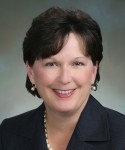
“The budget is going to pose many challenges for our communities and the state. I value the opinions of my constituents and look forward to hearing from them on their vision for the future of our state,” said Lytton.
Kristine invites all those interested in a general discussion of state government to join her at any one of the venues. Trending topics include education, fostering new ‘green’ jobs, the idea of an investment bank run by the state to fund local projects, as well as a general overview of the state budget situation.
Here are the upcoming dates and details:
- Tuesday, October 25, 6:00—Transition Fidalgo & Friends Seventh Generation Supper Anacortes Senior Center, 1701 22nd Street
- Wednesday, October 26, 5:30—Anacortes Education Roundtable School District Boardroom, Anacortes Middle School 2nd Floor, 2202 M Avenue
- Saturday, October 29, 1:00—Orcas Island Mobile Office Orcas Firehouse, 45 Lavender Lane, Eastsound
- Monday, October 31, 11:00-12:30—Burlington Mobile Office Burlington Library, 820 East Washington Avenue
- Wednesday, November 9, 4:00—Friday Harbor Education Roundtable Friday Harbor Middle School Commons, 85 Blair Avenue
- Wednesday, November 2, 1-3—Mt. Vernon Mobile Office Skagit Democrats Office, 300 A First Street
- Monday, November 14, 2-3:30—Bellingham Mobile Office The Firehouse Café, 1314 Harris Street
- Monday, November 21, 11:30-1:30—Bellingham Mobile Office Whatcom Democrats office, 215 West Holly Street, Suite B-27
Subscribe to:
Posts (Atom)
